
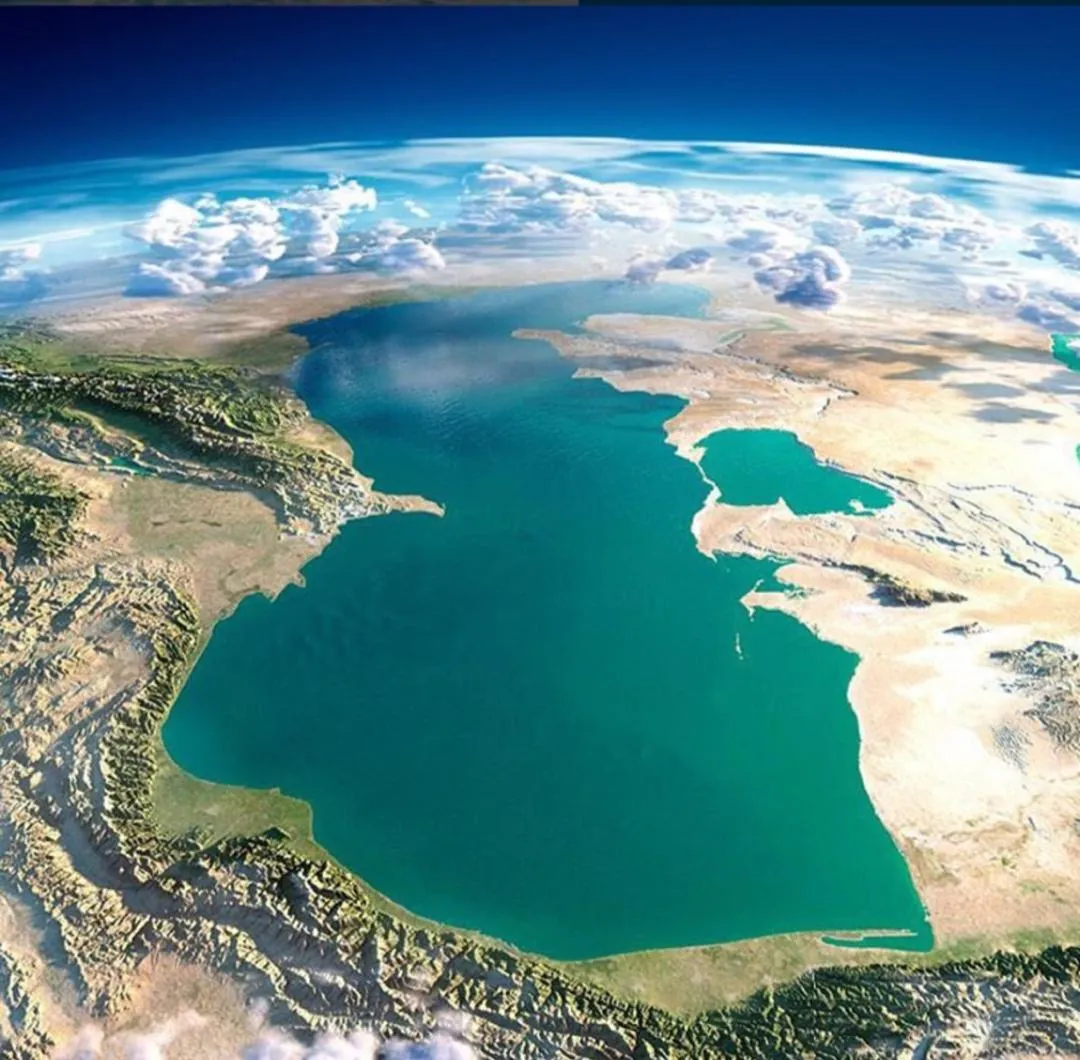
The World Bank plans to approve funding for the “Caspian Sea Cleanup: Pollution Management and Biodiversity Conservation Capacity Building” project on June 25. The project aims to strengthen pollution control and biodiversity conservation in the Caspian region, involving Azerbaijan, Kazakhstan, and Turkmenistan as beneficiary countries.
According to the World Bank, the project will be financed through a $12 million grant from the Global Environment Facility (GEF) and will be implemented over five years under the leadership of the United Nations Environment Programme (UNEP).
The funding is divided into four key components:
- National and regional policy and institutional development ($1.6 million)
- Pollution management ($4.9 million)
- Biodiversity conservation ($4.9 million)
- Project administration ($0.6 million)
The initiative focuses on enhancing pollution monitoring and control while improving the management of marine protected areas in the Caspian Sea. The Caspian, the world’s largest enclosed body of water, contains approximately 44% of the planet’s inland water resources and is bordered by Azerbaijan, Iran, Kazakhstan, Russia, and Turkmenistan.
The World Bank highlighted the Caspian ecosystem’s uniqueness, noting that it hosts around 400 endemic species. However, in recent decades, the sea level has dropped significantly. Projections suggest that by 2100, due to climate change and increased water resource consumption, the sea level could decline by 8 to 30 meters.
Key Aspects of the Project
The initiative aims to strengthen coordination between participating countries, enhance marine spatial planning (MSP), conduct training and knowledge exchange, and support regional institutions. It also includes the signing of memorandums of understanding and the development of regional environmental policies.
The pollution management component will include:
- Creating an inventory of land-based pollution sources
- Identifying pollution “hot spots” and assessing economic losses
- Developing national and regional pollution reduction programs
- Procuring environmental monitoring equipment
- Conducting ecological training sessions
- Promoting environmentally safe technologies
- Launching public awareness campaigns
Additionally, the project will focus on expanding and managing protected marine areas (MPAs), including:
- Developing and implementing MPA management plans
- Training personnel for conservation management
- Supporting sustainable fishing practices
- Assessing the economic damage caused by biodiversity loss
- Compiling lists of endangered species
- Running biodiversity awareness campaigns
The UNEP will establish a Project Coordination Unit (PCU) under the Tehran Convention Secretariat and form a Regional Steering Committee and technical working groups.
Alignment with Regional and Global Strategies
The project aligns with the World Bank’s Partnership Framework Strategies (CPF) for Azerbaijan and Kazakhstan and Turkmenistan’s National Development Strategy. It also supports the Central Asia Regional Strategy by promoting blue economy initiatives, addressing pollution, and conserving biodiversity in the Caspian Sea.
In the long term, the project aims to preserve the Caspian Sea’s ecological balance and enhance regional cooperation for sustainable resource management. Its implementation is expected to minimize pollution impacts, improve the region’s environmental health, and safeguard biodiversity for future generations.
Leave a Reply